AI Deployment That Works in Real Operations
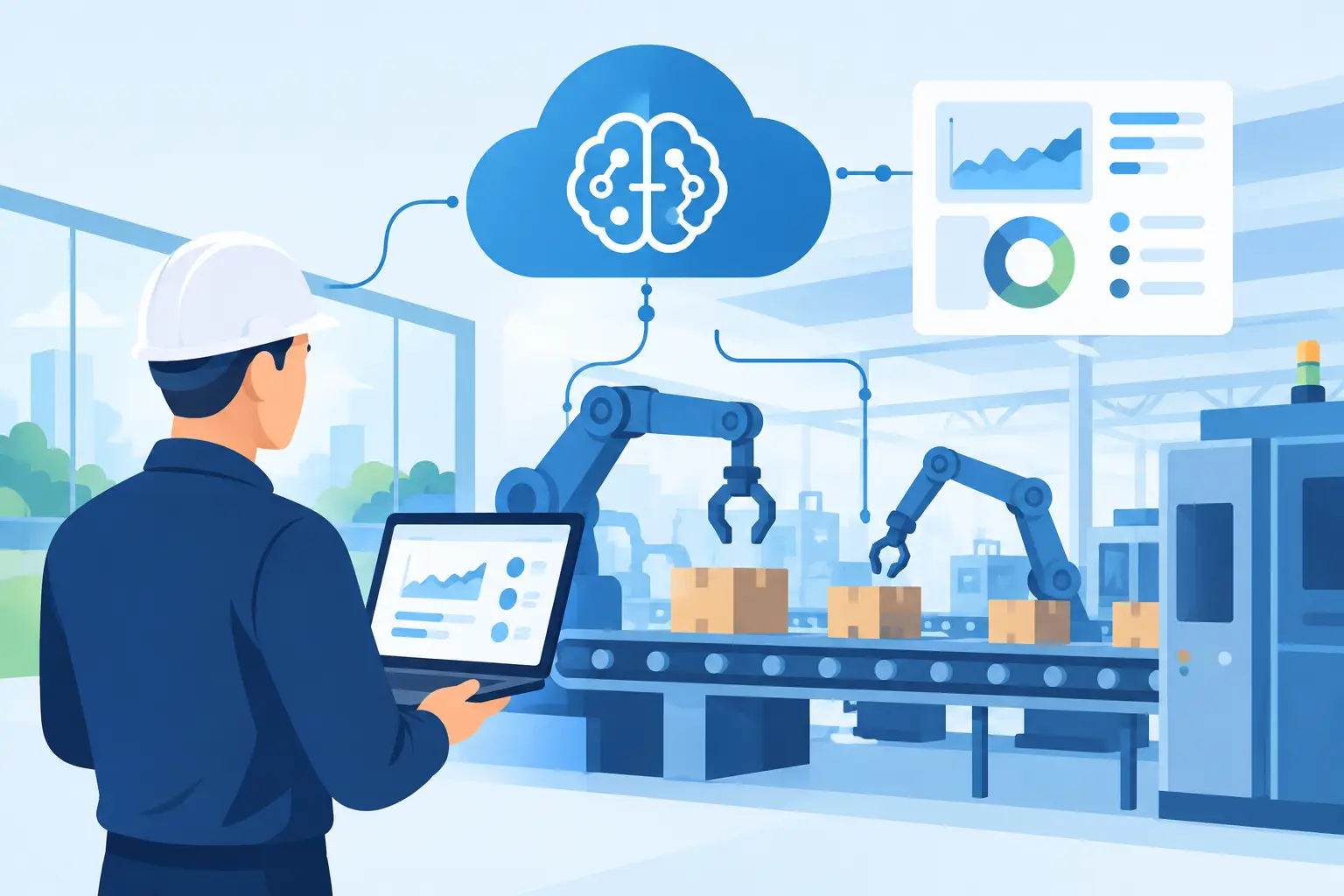
A promising AI demo can answer questions, summarize documents, or draft a client response in seconds. That is not the hard part. AI deployment is where the real work begins: connecting a useful capability to the right data, workflow, people, controls, and business measure so it keeps delivering value after the demonstration ends.
For Canadian organizations, the gap between interest and operational use is often not a shortage of ideas. Leaders can see repetitive work, slow handoffs, overloaded teams, and customer journeys that need improvement. The challenge is choosing an opportunity worth solving, then putting a secure and maintainable solution into daily practice without creating another disconnected tool.
AI deployment is a business change, not a software install
A deployment succeeds when employees can use the solution in the course of their normal work, understand where it helps and where it does not, and remain accountable for decisions that require judgment. A chatbot that lives outside the systems people already use may be technically functional, but it is unlikely to change performance. An AI assistant that pulls the right information into an existing case-management, CRM, service, or document workflow has a much stronger chance.
That distinction matters because AI introduces variable outputs. Traditional software generally follows fixed rules. Generative AI can interpret, draft, classify, and reason across unstructured information, but it can also be incomplete or wrong. The deployment model must therefore match the level of risk. A tool that drafts internal meeting notes needs different controls than one that assists with customer eligibility, legal analysis, clinical administration, or financial communications.
The objective is practical: remove avoidable effort while preserving human expertise, relationships, and approval. Good AI does not ask a team to trust a black box. It gives them a better first draft, faster access to knowledge, clearer next steps, or an automation that handles repetitive coordination.
Start with the workflow, not the AI tool
Many organizations begin by selecting a popular platform and then searching for a use case. This often leads to low adoption, duplicated subscriptions, and pilots that cannot be governed properly. A more reliable approach begins with the work itself.
Look for processes with a visible volume of repetitive activity, defined inputs and outputs, meaningful delays or error rates, and a clear owner. Examples include extracting information from incoming documents, preparing service summaries, triaging requests, responding to routine enquiries, creating first-pass proposals, and routing work to the right specialist. These are not glamorous problems, but they can produce measurable gains in turnaround time, capacity, consistency, and customer experience.
A strong candidate also has boundaries. The team should be able to say what information the system may access, what it must not do, who approves the result, and what happens when the confidence is low. If those answers are unclear, the organization may need process design and governance work before it needs a build.
The value case should be specific enough to test. Rather than claiming that an assistant will make a department more productive, define the current baseline: hours spent per week, average response time, rework volume, backlog size, conversion rate, or cost per case. Not every use case needs a dramatic return in the first month. Some build strategic capability or reduce operational risk. But every project needs a reason to exist beyond curiosity.
A practical AI deployment process
The most effective engagements first decide which lane the work belongs in (Adopt, Automate or Instrument), then move through three connected stages: discover, build and adapt. They are not bureaucratic gates. They reduce expensive uncertainty before it reaches production.
Discover the highest-value opportunity
Discovery combines process mapping with technical and operational assessment. The goal is to understand how work actually happens, including exceptions, informal workarounds, data sources, approvals, and the systems employees rely on every day.
This is also where leaders make the decisions that cannot be delegated to a model. What outcome matters most? Which users should be involved first? Is the organization optimizing for faster service, greater capacity, better quality, reduced risk, or all four? What level of human review is required? A short, disciplined discovery sprint can prevent months of building the wrong thing.
For Canadian organizations handling personal, financial, health, legal, or confidential business information, privacy assessment belongs here as well. Consider PIPEDA obligations, contractual commitments, retention rules, data residency requirements, role-based access, and whether customer or employee data can be used in prompts or model training. These are design inputs, not a compliance exercise to complete at the end.
Build for the environment you already have
The build stage turns the selected workflow into working software or automation. That may mean an internal AI agent, a customer-facing application, a document-processing workflow, or an integration that brings AI capabilities into existing tools. The right answer depends on the job.
Off-the-shelf tools can be appropriate for lower-risk, broadly useful tasks. They are fast to test and may be enough when no sensitive information or complex integration is involved. Custom development becomes more valuable when the workflow depends on proprietary knowledge, controlled access to internal systems, industry-specific rules, or a customer experience that cannot be left to a generic interface.
Integration deserves more attention than it usually receives. An AI agent may need to retrieve approved knowledge, create or update records, trigger a task, hand work to a person, and log what happened. Each connection needs authentication, permission controls, error handling, and a clear owner. Building the model interaction without these operational details is how teams end up with an impressive prototype that cannot be relied upon.
Testing should use realistic cases, including the awkward ones. Evaluate output quality, refusal behaviour, escalation paths, latency, cost, and what the system does when source information is missing or contradictory. Where outputs affect customers, employees, or regulated decisions, human approval and auditability should be designed into the workflow rather than added as an afterthought.
Adapt through adoption and measurement
Deployment is not complete when the tool goes live. Teams need practical training that explains the new workflow, the limits of the AI, and how to report problems. The people doing the work often identify the most valuable refinements because they see where inputs are inconsistent, where exceptions occur, and where an approval step creates friction.
Monitor both business and technical measures. Adoption rate alone is not proof of value, just as a technically accurate model is not proof that a workflow has improved. Track the measures established during discovery, alongside quality reviews, override rates, response times, failure patterns, and user feedback. If a solution saves time but creates more corrections, it needs adjustment.
This ongoing work is also how governance stays useful. Policies should define acceptable use, data handling, approval requirements, and accountability, but they must be translated into everyday practice. A policy that employees cannot apply in a busy workday will be ignored. Clear guardrails, accessible support, and periodic reviews are more effective than vague warnings about responsible AI.
Common reasons deployments stall
The first problem is treating AI as an isolated innovation project. When IT, operations, legal, security, and frontline users are brought in only after a prototype is selected, legitimate concerns arrive late and momentum disappears. Involve the right people early, with a focused decision to make.
The second is trying to automate judgment that should remain human. AI can prepare options, surface relevant information, and identify patterns. It should not quietly make high-impact decisions where context, accountability, or fairness demands expert review. The appropriate level of autonomy depends on the workflow and its consequences.
The third is aiming too broadly. A company-wide transformation program can be valuable, but an early deployment often benefits from a narrow, high-frequency process with a measurable outcome. A contained success builds confidence, creates reusable governance patterns, and reveals what integration and support capability the organization will need next.
Finally, some projects stall because the organization receives strategy without delivery. A roadmap has value only if it leads to decisions, builds, and changes in day-to-day work. Adapting Services works from process discovery through technical implementation and ongoing improvement because accountability should continue until the solution is operating where the work happens.
Build capability, not dependence
A sensible AI roadmap balances quick wins with long-term capability. The first deployment should solve a real problem, but it should also teach the organization how to assess risk, manage access, evaluate output quality, train users, and support change. Those lessons make the second and third deployment faster and more reliable.
The best next step is rarely to buy another AI subscription. It is to choose one operational process where delay, repetition, or inconsistency is costing the business something measurable, then examine it closely enough to build the right solution. That is where AI becomes less of a promise and more of a useful part of the work.